Flat vs Cube Coals Heat Output: A Professional Guide for Hookah Enthusiasts
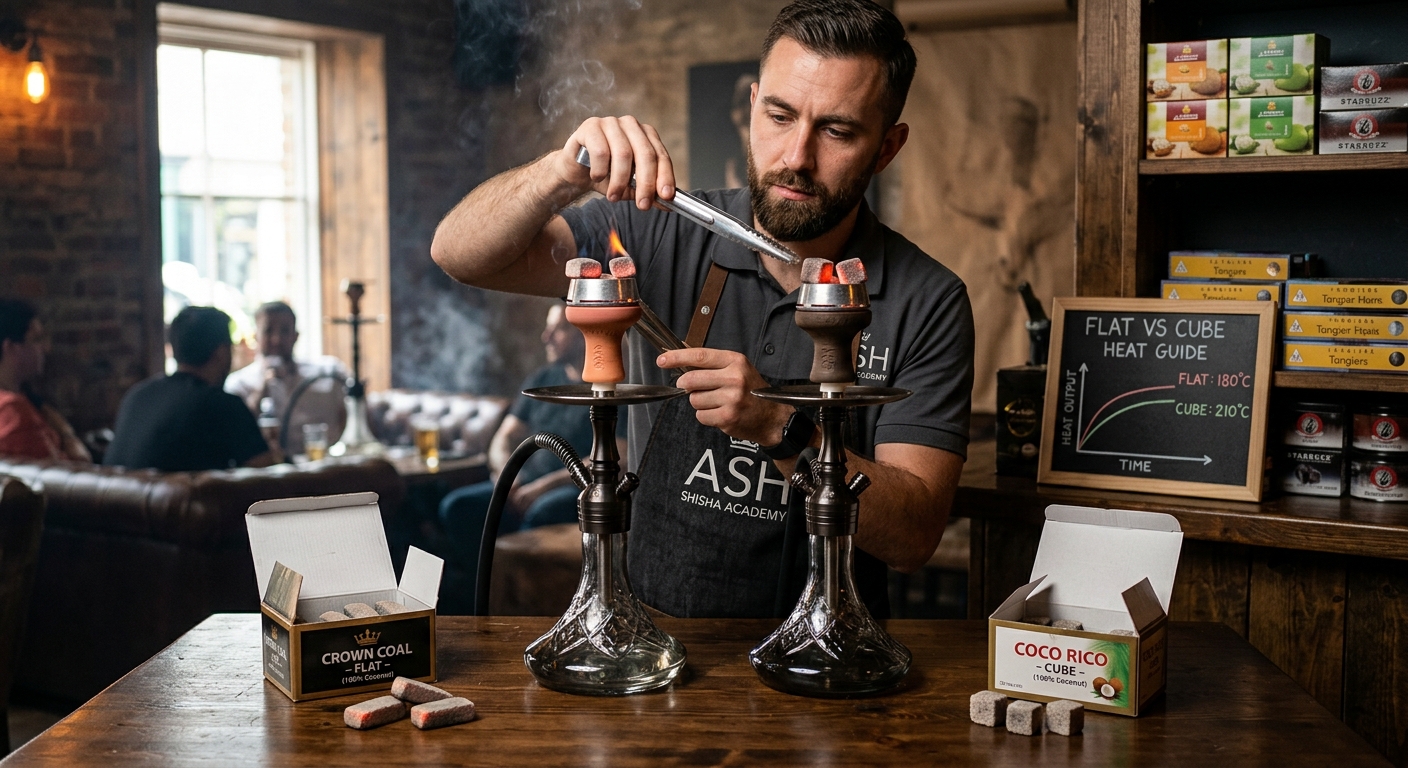
When it comes to preparing the perfect hookah session, the type of charcoal you use is just as important as the shisha tobacco itself. The debate regarding flat vs cube coals heat output is a common one among both novice and veteran hookah enthusiasts. The shape, density, and surface area of the coals you choose dictate the temperature of your bowl, how quickly your tobacco cooks, and the overall longevity of your session. In this comprehensive guide, we will explore the technical nuances between flat and cube coals, how they distribute heat, and which option is best suited for your specific hookah setup.
Understanding Hookah Charcoal Shapes
Modern hookah coals are primarily made from compressed coconut husks, which provide a clean, odorless, and tasteless burn compared to traditional quick-light coals. However, the manufacturing process molds these coconut briquettes into various shapes—most notably flats and cubes. The geometry of the coal directly affects its thermodynamics. A larger surface area allows more oxygen to interact with the burning carbon, resulting in an intense but potentially shorter burn. Conversely, a denser shape with less relative surface area will burn slower and provide a more consistent, lingering heat.
The Heat Output of Flat Coals
Flat coals are rectangular with a distinctively wide top and bottom surface, while having very narrow sides. Because they are thinner than cube coals, flat coals ignite faster on a traditional electric burner. Their wide, flat surface area allows for excellent heat transfer when placed directly on top of hookah foil or inside a heat management device (HMD).
The primary advantage of flat coals is their heat responsiveness. They deliver a quick burst of intense heat that is fantastic for jump-starting a cold bowl. If you are interested in exploring the top brands that utilize this shape, reading The Best Flat Coconut Coals for Hookah: A Comprehensive Guide is an excellent place to start.
However, the increased surface-to-volume ratio means that flat coals tend to burn out faster than cubes. You will likely need to ash them more frequently and rotate them more often to maintain a consistent temperature. For those who prefer a traditional foil setup, managing this rapid heat is an art form. To perfect this technique, we highly recommend checking out Mastering Flat Coals on Foil Shisha: A Professional Guide to Perfect Sessions.
The Heat Output of Cube Coals
Cube coals, as the name suggests, are perfectly symmetrical blocks (usually measuring 22mm, 25mm, or 26mm on all sides). The cubic shape boasts a lower surface-to-volume ratio compared to flat coals. This means that while they may take slightly longer to fully ignite on the burner, they provide a much longer, steadier burn during your session.
The heat output of cube coals is characterized by its consistency. Because the mass is concentrated, the core of the coal stays hot for an extended period, slowly radiating heat downward into the bowl. This makes cube coals incredibly popular for use with modern Heat Management Devices (HMDs), where steady, prolonged heat is required to bake the shisha without scorching it. The ashing process is also slower, meaning less maintenance and fewer interruptions to your smoking experience.
Comparing the Heat Output: Flat vs Cube
To provide a clear understanding of how these two shapes stack up against each other, let us look at a direct comparison of their performance metrics.
| Feature | Flat Coals | Cube Coals |
|---|---|---|
| Ignition Time | Fast (5-7 minutes) | Moderate to Slow (8-12 minutes) |
| Initial Heat Output | High and immediate | Gradual and steady |
| Longevity | Approx. 40-50 minutes | Approx. 60-90 minutes |
| Ash Production | Higher frequency of ashing | Lower frequency, maintains structure longer |
| Best Used For | Foil setups, quick sessions, precise heat control | HMDs, long sessions, dense shisha packing |
The Importance of Charcoal Quality
Regardless of whether you choose flat or cube coals, the intrinsic quality of the charcoal material is paramount to heat output. Subpar coals will produce inconsistent heat, excessive ash, and potentially ruin the flavor of your shisha with unwanted chemical tastes. The best hookah charcoals on the market are sourced from high-grade coconut shells, predominantly originating from Southeast Asia.
The production standards in these regions dictate the density and carbon content of the final product. For an in-depth look at what makes these products superior, you can read Indonesia Coconut Charcoal Briquettes Export Quality: A Comprehensive Guide. Ensuring you source your coals from reputable manufacturers guarantees that you are getting the optimal heat output for the shape you select. To guarantee your sessions are always top-tier, it is wise to invest in premium hookah charcoal from dedicated industry leaders.
Conclusion
The debate between flat vs cube coals heat output ultimately boils down to your personal smoking preferences and your specific hookah setup. Flat coals offer rapid ignition and immediate, intense heat that is ideal for traditional foil preparations and shorter sessions where heat manipulation is key. On the other hand, cube coals provide a slow, steady, and long-lasting heat output that pairs perfectly with modern heat management devices and extended smoking sessions. By understanding the thermodynamic properties of each shape and investing in high-quality coconut charcoal, you can easily tailor your heat management strategy to achieve the perfect, flavorful clouds every time.
Frequently Asked Questions
Can I use flat coals in a Heat Management Device (HMD)?
Yes, you can use flat coals in an HMD. In fact, many users prefer placing two or three flat coals inside an HMD to get the bowl up to temperature quickly. However, because they burn faster, you may need to add a fresh coal sooner than you would if you were using cube coals.
Do cube coals produce more heat overall than flat coals?
Over the entire lifespan of the coal, a cube will generally produce a higher total thermal output simply because it contains more mass and burns longer. However, flat coals can produce a higher initial spike in temperature due to their larger surface area making contact with the foil or HMD.
Why do my flat coals ash so quickly?
Flat coals ash more rapidly because their thinner shape allows oxygen to reach a larger percentage of the coal's mass simultaneously. This faster combustion rate leads to quicker ash accumulation, requiring you to tap the ash off and flip the coals more frequently to maintain optimal heat output.


Comments
Post a Comment