Cube Coals vs Flat Coals: Understanding Ash Production and Heat Management
Introduction to Shisha Charcoal Varieties
For hookah enthusiasts and lounge owners alike, the choice of charcoal is just as critical as the choice of shisha tobacco. The charcoal serves as the engine of the hookah, providing the necessary heat to bake the tobacco and produce thick, flavorful smoke. Among the various shapes available on the market, cube coals and flat coals remain the most popular. While much debate centers around their heat output and longevity, one often overlooked but crucial factor is ash production. Understanding the dynamics of cube coals vs flat coals ash is essential for maintaining clean sessions, managing heat effectively, and preserving the flavor of your shisha.
Ash is a natural byproduct of burning coconut shell charcoal, which is the industry standard for premium hookah sessions. However, the volume, consistency, and structural integrity of that ash can vary significantly depending on the shape and density of the coal. Choosing a premium shisha charcoal provider is essential to ensure that regardless of the shape you choose, the ash content remains as low as naturally possible.
The Anatomy of Flat Coals and Their Ashing Characteristics
Flat coals are characterized by their rectangular, low-profile shape. Typically measuring around 25mm x 25mm x 15mm, these coals are favored for their quick ignition times and lower, more manageable heat output. Because they have a larger surface area relative to their volume, flat coals interact differently with oxygen compared to thicker cuts.
When it comes to ash production, flat coals tend to ash faster. The rapid consumption of the briquette means that ash accumulates on the surface of the coal more quickly. This can act as an insulating layer, which may inadvertently lower the heat reaching your hookah bowl. Consequently, flat coals require more frequent ashing—using tongs to tap the coal and remove the excess ash. If neglected, the loose ash can fall into the bowl, particularly if you are using standard aluminum foil, which can impart a harsh, charcoal-like taste to your session. For a deeper dive into controlling your session's temperature, reading about Mastering Hookah Heat Management: Flat vs Cube Coals is highly recommended.
The Anatomy of Cube Coals and Their Ashing Characteristics
Cube coals, usually measuring 25mm x 25mm x 25mm (or 26mm for jumbo cubes), offer a higher volume and density. This geometric structure significantly alters the burning dynamics. Cubes take longer to light completely, but they reward the user with a substantially longer burn time and a higher, more consistent heat output.
Because of their compact shape and increased density, cube coals produce ash at a slower, more predictable rate. The ash tends to stick to the coal rather than flaking off easily, maintaining the structural integrity of the cube even as it shrinks. This dense ash layer can actually be beneficial, as it regulates the intense heat of the cube, preventing the shisha tobacco from scorching. Users often find that cube coals require less frequent maintenance during a session. However, when tapping a cube coal, the clump of ash is usually larger, requiring careful handling to avoid dropping it on the hookah tray or the floor.
Comparing Ash Content and Quality
The quality of the ash is heavily dependent on the manufacturing process and the raw materials used. High-quality coconut coals, regardless of shape, should have an ash content of less than 3%. Lower quality coals may contain fillers or chemicals that not only increase the ash volume but also cause the ash to turn brown or yellow, rather than the ideal white or light gray. To understand the industry standards for ash content, you should review the Indonesian Charcoal Export Specifications for Shisha: A Comprehensive Guide.
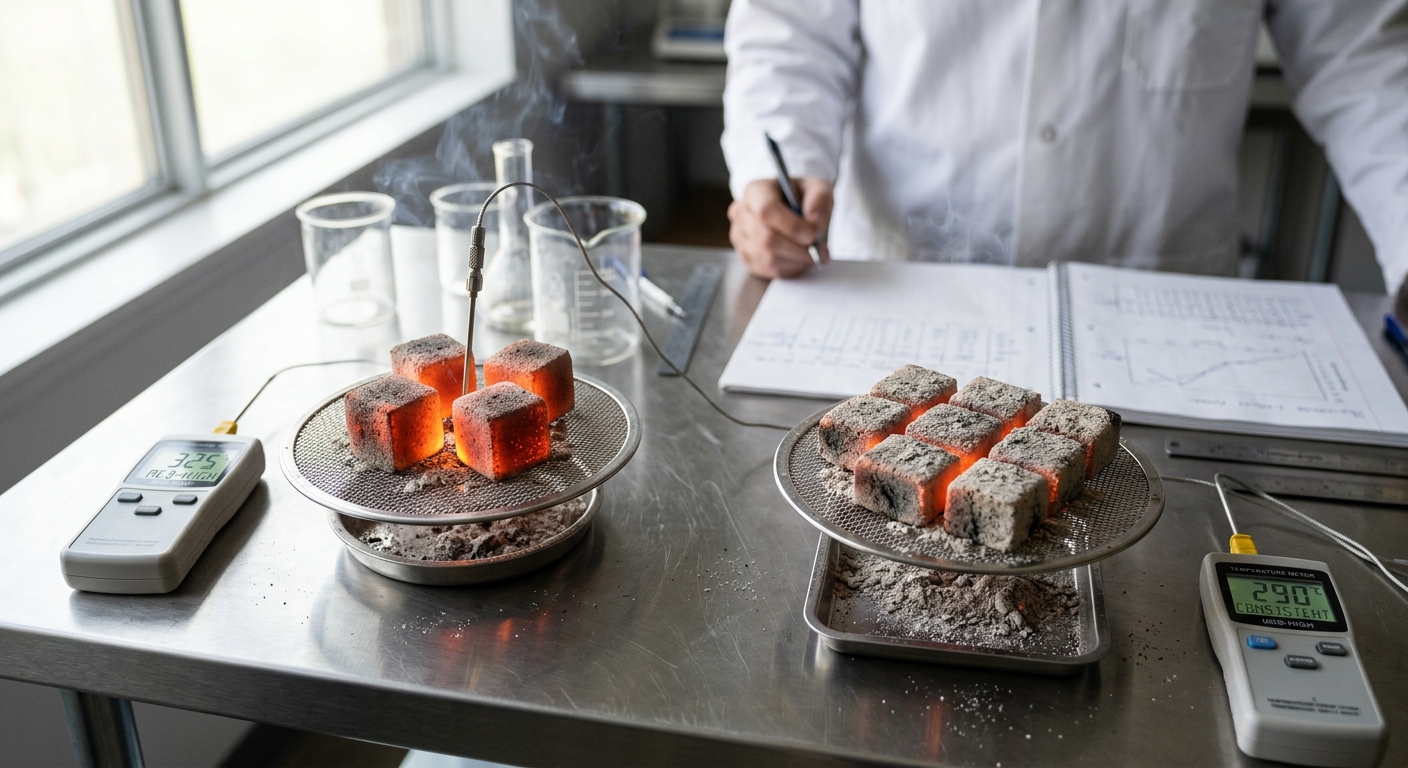
When comparing the two, the total volume of ash produced by a single cube coal will inherently be greater than that of a single flat coal by the end of its life cycle, simply because there is more combustible material. However, the rate of ashing and the manageability of that ash are where the real differences lie. If you are still undecided, exploring Cube vs Flat Shisha Coals: A Comprehensive Guide to Choosing the Right Charcoal can provide additional insights into making the best choice for your setup.
Practical Implications for Hookah Smokers
The choice between cube and flat coals should be guided by your specific hookah setup and smoking preferences:
- Foil vs. Heat Management Devices (HMDs): Flat coals are often preferred by traditionalists using foil because their lower heat profile reduces the risk of burning the tobacco. However, their tendency to ash quickly means you must be vigilant about keeping the foil clean. Cube coals are widely favored for HMDs (like the Kaloud Lotus) because the device captures the ash, keeping it away from the tobacco, while benefiting from the cube's long-lasting heat.
- Session Length: If you are planning a short session (45-60 minutes), flat coals are highly efficient. For longer sessions (90+ minutes), cube coals are superior as they reduce the need to constantly light fresh coals.
- Airflow and Heat Fluctuation: Excess ash restricts airflow and acts as an insulator. Because flat coals require more frequent tapping, they can cause micro-fluctuations in heat. Cube coals provide a more stable heat curve over time.
Below is a quick reference guide comparing the standard attributes of both coal types.
The following table outlines the concrete differences between standard cube coals and flat coals regarding dimensions, burn time, ash management, and ideal usage.
| Charcoal Type | Standard Dimensions | Average Burn Time | Ash Accumulation Rate | Ideal Setup |
|---|---|---|---|---|
| Flat Coals | 25mm x 25mm x 15mm | 45 - 60 Minutes | Fast (Requires frequent tapping) | Foil setups, short sessions |
| Cube Coals | 25mm x 25mm x 25mm | 90 - 120 Minutes | Slow (Retains shape well) | HMDs, long sessions |
Conclusion
In the debate of cube coals vs flat coals ash, there is no definitive winner—only the right tool for the right job. Flat coals offer quick ignition and a manageable heat profile at the cost of more frequent ashing and maintenance. Cube coals deliver robust, long-lasting heat with structurally sound ash, making them ideal for prolonged sessions and modern heat management devices. By understanding how the shape of your charcoal dictates its ashing behavior, you can tailor your setup to achieve the cleanest, most flavorful hookah experience possible. Always prioritize premium, 100% coconut shell charcoal to ensure that regardless of the shape, your ash content remains minimal and your smoke remains pure.
Frequently Asked Questions
Why does my charcoal produce so much ash?
Excessive ash is usually a sign of low-quality charcoal that contains wood fillers or chemical binders instead of pure coconut shell. Always look for coals that advertise an ash content of under 3%.
Can the ash from flat coals ruin my hookah flavor?
Yes, if you are using standard aluminum foil and the ash falls through the holes into the shisha tobacco, it can create a harsh, burnt flavor. Regular tapping and clearing of the ash is required.
Do cube coals take longer to light than flat coals?
Yes, due to their increased density and larger volume, cube coals generally take 3 to 5 minutes longer to fully ignite on a specialized charcoal burner compared to flat coals.
Should I use cube or flat coals with a Heat Management Device (HMD)?
Cube coals are generally recommended for HMDs. Their shape fits well inside most devices, their long burn time suits the heat retention of the metal, and the HMD prevents their ash from contaminating the tobacco.


Comments
Post a Comment